

Købelev Thor’s Hammer
This 10th century Thor’s Hammer was discovered in Købelev on the Danish island of Lolland. As well as the torshammere, the archaeologists recovered fragments of silver needles and a mould for making brooches, which suggest that there may be a workshop in the vicinity.
The object is cast in bronze and has traces of silver or tin and gold plating. Most importantly, It bears a runic inscription which reads: ‘Hmar x is’ meaning ‘This is a Hammer’.
The fact that the person who made the hammer was literate is a source of considerable interest for archaeologists. They claim the amulet could indicate that literacy was widespread among craftspeople.
Museum Lolland-Falster, who reported the discovery, has no plans to excavate the Viking site at Købelev, but said it will continue metal detector surveys.
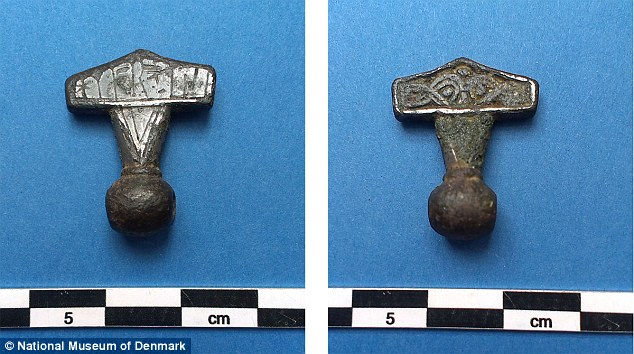
Købelev Thor’s Hammer
image: National Museum of Denmark
(click on the images to enlarge)
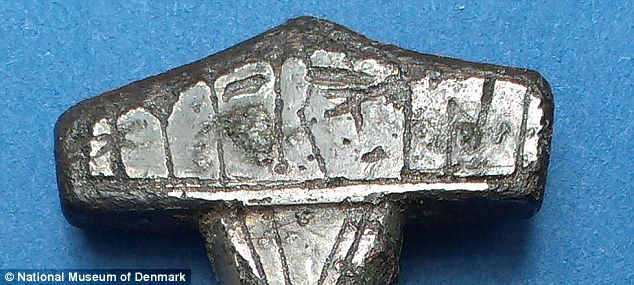
The Runic inscription
image: National Museum of Denmark
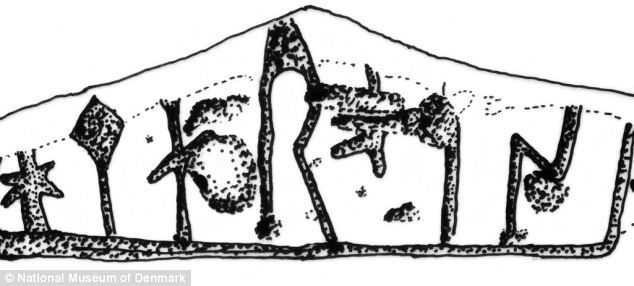
Drawing of the Runic inscription
image: National Museum of Denmark